
About a decade ago a book called “Startup Nation” was published. It focused on the tech sector in Israel and the innovation that has happened here. However, this place could also be called “Renovation Nation” because of all the apartment buildings that are constantly being overhauled. Here’s a photo I snapped this morning while waiting at the bus stop.
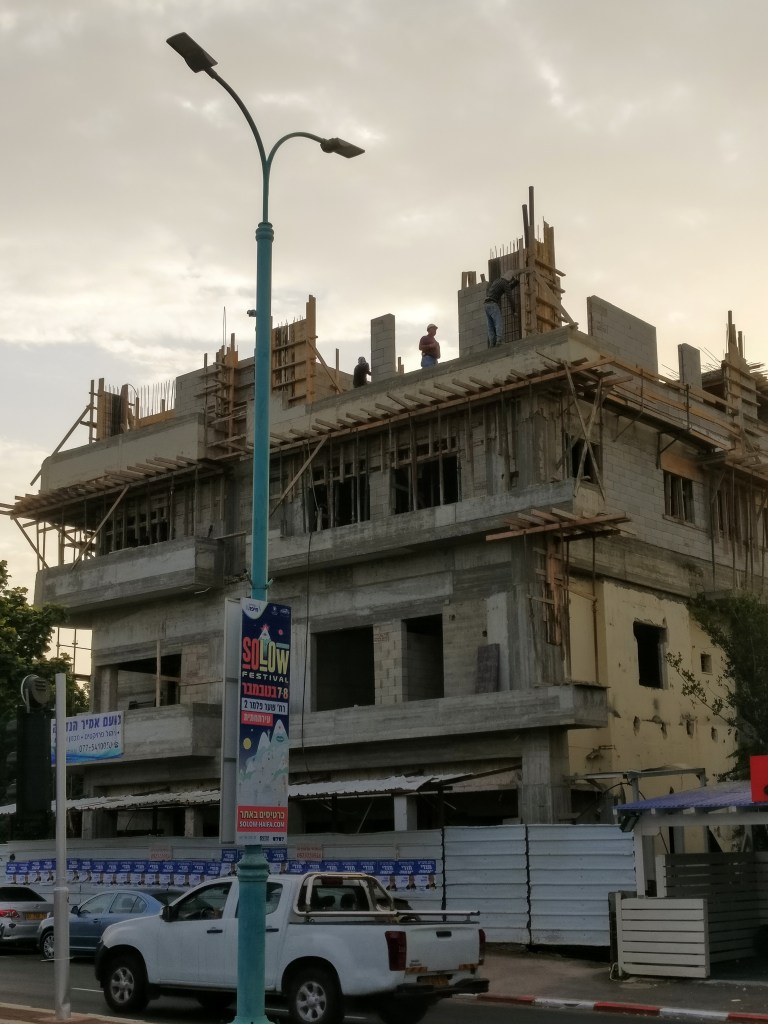
The workers are adding a new floor as part of the renovation. There is a government program where old buildings get redone periodically and there is something in the deal for everyone. The developer/builder gets to add a new floor that they can sell for a profit. Current residents get a shiny, new apartment with modern amenities. The government gets strengthened foundations (there is a very real earthquake threat here), higher property values, a bustling construction industry, and incremental increases in urban density.
Much of the criticism of “pinui binui” has centered on where the renovations are taking place (big cities rather than the quake-vulnerable Jordan Rift Valley; not enough renovation in the poorest neighborhoods) and whether existing residents are getting enough value out of the deal (top floor apartments are nicer). The examples of this practice near where we live in Haifa feel very much like high-end units, so the immediate reaction is “yep, this is gentrification”. But on the other hand, it’s not at all clear that existing residents of the building itself are being displaced. Maybe rents go up in the neighborhood and people are priced out, but there is a guaranteed net gain in housing units. At the very least, this constant upgrading where existing residents, developers, and the government all get something they want is an interesting model.
 Keeping It Israel